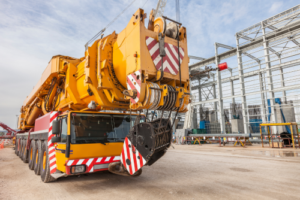
Mobile crane selection — Article 2 of the UAE Mobile Crane Rental Planning Series
Choosing the right mobile crane is one of the most important decisions in any construction, infrastructure or industrial lifting project. Whether a contractor is installing steel structures in Dubai, positioning equipment at an industrial facility in Abu Dhabi or handling heavy construction materials in Sharjah, selecting suitable lifting machinery directly affects productivity, safety and project costs.
However, hiring a crane is not simply a matter of matching the weight of a load with the advertised tonnage of a machine.
A crane labelled as a 100-tonne machine cannot necessarily lift a 100-tonne load at every operating radius. Its actual lifting capacity depends on several technical factors, including boom length, lifting configuration, ground conditions and the horizontal distance between the crane and the load.
For businesses considering mobile crane rental in Dubai or elsewhere in the UAE, understanding these factors helps prevent incorrect equipment selection, unnecessary mobilisation expenses and avoidable construction delays.
This guide explores the principles of mobile crane selection, compares different types of movable cranes and explains how contractors can choose suitable equipment for demanding UAE construction environments.
Why Mobile Crane Selection Matters in Construction Projects
Mobile cranes provide essential lifting capabilities for projects involving heavy machinery, prefabricated structural components, construction materials and industrial equipment.
They offer flexibility because they can be deployed at different construction sites without requiring permanent crane installation.
Common applications include:
- Steel structure erection
- Precast concrete installation
- Industrial machinery positioning
- Heavy equipment loading and unloading
- Infrastructure construction
- Mechanical equipment installation
- Commercial building development
- Bridge and industrial plant construction
- Heavy lifting and material positioning
Despite their versatility, different mobile cranes have different operating capabilities.
For example, a compact truck-mounted crane may be appropriate for an accessible urban project involving moderate loads, while a large all-terrain crane may be necessary for an industrial installation requiring greater reach and lifting capacity.
A rough terrain crane may be better suited to certain unfinished outdoor construction environments.
The correct equipment choice depends on the complete lifting operation rather than a single equipment specification.
Understanding Crane Load Capacity
Load capacity refers to the weight a crane is permitted to lift under a defined operating configuration.
Crane manufacturers provide load charts specifying lifting capacities at different radii, boom lengths and configurations.
These charts are essential for professional crane selection.
Rated Capacity vs Actual Lifting Capacity
The maximum rated capacity displayed in a crane's description is generally associated with specific manufacturer-defined operating conditions.
It does not represent the maximum load at every distance or boom position.
As the horizontal distance between a crane and its load increases, the crane's available lifting capacity will generally decrease.
Other configuration factors can also affect capacity.
These include:
- Main boom length
- Boom extension or jib arrangement
- Counterweight configuration
- Outrigger deployment
- Crane operating position
- Lifting radius
- Manufacturer-specific restrictions
For this reason, contractors should never select a crane based on advertised tonnage alone.
Understanding Total Suspended Weight
When preparing a lifting operation, the planning team must establish the actual weight involved.
Depending on the crane's load-chart conventions, this can include the main load and relevant lifting equipment, such as hooks, slings, shackles and spreader beams.
A steel component weighing 15 tonnes, for example, may require additional rigging equipment.
The total load considered in the lift calculation must be determined correctly, without overlooking rigging weights or counting chart deductions twice.
The lift planner must verify the applicable manufacturer's instructions and load chart.
Why Accurate Load Information Matters
Incorrect weight information can result in unsuitable equipment being selected.
Before requesting a crane quotation, contractors should ideally prepare:
- Verified load weight
- Load dimensions
- Centre-of-gravity information
- Approved lifting points
- Required lifting accessories
- Relevant fabrication or equipment drawings
Providing accurate information allows a crane rental provider to begin the technical assessment with fewer uncertainties.
What Is Lifting Radius and Why Is It Important?
Lifting radius is one of the most important factors in mobile crane selection.
The working radius is the horizontal distance from the crane's centre of rotation to the vertical line through the load.
It is not the same as lifting height.
A load may be relatively light but positioned far away from the crane.
In such cases, the required crane capacity may be considerably greater than the load weight alone suggests.
How Radius Changes Lifting Requirements
Consider a hypothetical project involving a 12-tonne industrial component.
The component must be placed inside a factory compound, but the crane cannot stand directly beside the installation point.
If the crane must operate at a significant horizontal radius, its available capacity will be lower than at a shorter radius.
A crane with adequate nominal tonnage may still be unsuitable if its actual load chart does not permit that load at the required distance.
The solution may involve:
- Selecting a higher-capacity crane
- Repositioning the crane closer to the load
- Adjusting the lifting arrangement
- Removing an obstruction where safe and practical
- Reviewing alternative equipment configurations
The correct choice must be determined through a technical assessment.
Measuring Lifting Radius Correctly
For accurate crane selection, contractors should identify:
Pickup radius: The distance between the crane and the load's original position.
Placement radius: The distance between the crane and the final installation position.
Maximum operating radius: The greatest radius encountered during the planned lifting movement.
The maximum radius may occur at an intermediate point rather than at pickup or placement.
Accurate measurements are especially important on restricted construction sites where cranes must operate around existing structures.
The Relationship Between Boom Length and Lifting Height
Boom length and lifting height are closely related, but they are not identical.
A mobile crane's boom must provide sufficient reach to position the load at the intended height while maintaining necessary clearance.
For example, installing equipment on a commercial rooftop may require the crane to lift the load above a parapet before lowering it into place.
The required hook height must account for the load dimensions, lifting accessories and overhead clearance.
An excessively long boom configuration can also affect lifting capacity.
Therefore, the most suitable configuration is not necessarily the longest available boom.
Questions to Consider
Before choosing a crane, determine:
- What is the required installation height?
- Are there nearby buildings or structures?
- Does the load need to pass over an obstruction?
- How much clearance is required?
- What boom configuration can safely complete the operation?
- Are there overhead power lines or restricted areas?
These questions help the lifting team evaluate the complete operating geometry.
Different Types of Mobile Cranes Used in the UAE
Movable lifting equipment is available in several configurations.
Each type offers particular advantages depending on project conditions.
1. Truck-Mounted Mobile Cranes
Truck-mounted cranes combine lifting equipment with a wheeled vehicle chassis.
They are particularly useful for projects where access roads are suitable and equipment must travel between locations.
Typical applications include:
- Construction material lifting
- Steel structure installation
- General industrial lifting
- Mechanical equipment positioning
- Short-duration construction operations
Their practical advantages can include road mobility and relatively efficient deployment.
However, suitability depends on the model, site accessibility, lifting requirements and road restrictions.
2. All-Terrain Cranes
All-terrain cranes combine road-travel capability with features designed for movement on suitable construction-site surfaces.
They are often selected for projects requiring substantial lifting capabilities and flexible mobilisation.
Common applications include:
- Infrastructure development
- Industrial plant construction
- Heavy machinery installation
- Large structural lifting
- Commercial developments
A professional all-terrain crane rental in UAE may be suitable where contractors require a combination of lifting performance and mobility.
3. Rough Terrain Cranes
Rough terrain cranes are designed primarily for off-road movement around construction environments.
They commonly feature robust tyres, specialised steering arrangements and configurations suited to certain uneven working surfaces.
Typical applications include:
- Infrastructure construction
- Outdoor industrial projects
- Remote development sites
- Unfinished construction areas
- Heavy material positioning
A rough terrain crane rental in Dubai may be appropriate where the operating environment is less accessible to conventional road-going equipment.
However, rough terrain capabilities do not eliminate the need to assess ground stability and safe lifting support.
4. Crawler Cranes
Crawler cranes use tracked undercarriages and can offer substantial lifting capabilities for suitable applications.
They are frequently considered for major infrastructure, industrial and long-duration heavy lifting projects.
Potential advantages include a broad support footprint and configurations suitable for demanding lifts.
However, crawler cranes may require significant mobilisation arrangements, assembly space and specialised transportation.
They should be evaluated against the duration and complexity of the project.
Comparing Different Crane Types
| Crane Type | Common Applications | Important Considerations |
|---|---|---|
| Truck-mounted mobile crane | General construction and industrial lifting | Road access, capacity and setup space |
| All-terrain crane | Infrastructure and heavy industrial lifting | Ground conditions, road movement and configuration |
| Rough terrain crane | Outdoor and unfinished construction sites | Site mobility and suitable ground support |
| Crawler crane | Major infrastructure and substantial lifting operations | Transport, assembly space and ground preparation |
This comparison provides general guidance rather than a final equipment recommendation.
Individual crane models must be assessed against their actual technical specifications and manufacturer-approved lifting arrangements.
How Terrain Affects Mobile Crane Selection
Construction sites across Dubai and the UAE vary considerably.
An urban construction site may have prepared access roads and compact operating areas.
An industrial development may involve hardstanding, underground services and restricted working zones.
Infrastructure projects may operate on uneven or unfinished surfaces.
These differences directly influence crane selection.
Urban Construction Sites
Urban projects can present challenges such as:
- Limited working space
- Restricted delivery routes
- Nearby buildings
- Pedestrian movement
- Overhead services
- Underground utilities
Mobile crane selection should account for both lifting requirements and the space available for safe setup.
Industrial Sites
Industrial facilities may involve heavy machinery, complex lifting paths and restricted access.
Crane positioning must be carefully coordinated with operating equipment, existing structures and site safety procedures.
All-terrain or other suitable mobile cranes may be considered depending on the load and operating conditions.
Uneven and Unprepared Ground
Outdoor construction environments may contain:
- Loose soil
- Uneven surfaces
- Recently compacted fill
- Excavation areas
- Temporary access roads
- Buried drainage or utility structures
These conditions require careful assessment.
A crane's ability to travel across a surface does not automatically mean that surface can safely support the crane during lifting.
Ground-Bearing Capacity and Crane Stability
Ground support is an essential part of safe lifting operations.
When a crane is lifting, substantial forces can be transferred through its outriggers, tyres or tracks.
The supporting ground must be capable of carrying the relevant loads.
For outrigger-supported cranes, appropriate support mats or load-spreading arrangements may be required.
A competent assessment should consider:
- Soil conditions
- Ground-bearing capacity
- Outrigger reactions
- Underground services
- Nearby excavations
- Available support area
- Suitable load-spreading arrangements
Ground conditions can also change as construction progresses.
Excavation, rainfall, ground disturbance or heavy site traffic may alter the suitability of an operating position.
A properly prepared crane position is therefore as important as choosing the correct lifting capacity.
How UAE Weather Conditions Influence Crane Operations
Environmental conditions are another important part of crane selection and lifting planning.
Across the UAE, contractors may encounter strong winds, dust, high temperatures and periods of reduced visibility.
Wind can be particularly important when lifting large components with substantial exposed surface areas.
Examples include:
- Steel panels
- Precast wall sections
- Cladding materials
- Large mechanical units
- Prefabricated structures
The acceptable operating conditions depend on the crane manufacturer, load characteristics, lifting configuration and site-specific risk assessment.
There is no single wind limit that safely applies to every crane and every load.
Contractors should establish appropriate monitoring and stop-work arrangements before lifting begins.
Weather planning can improve safety and reduce the likelihood of unexpected interruptions.
Crane Selection for Common Construction Applications
Different project requirements can influence crane type and configuration.
Steel Structure Installation
Steel installation requires attention to component weight, lifting points, working radius and the planned erection sequence.
Site access and the position of supporting structures may affect crane setup.
Precast Concrete Installation
Precast components may be heavy, large or awkwardly shaped.
Lifting plans should address load geometry, suitable rigging and controlled placement.
Industrial Machinery Installation
Industrial installations may involve limited clearances and restricted lifting paths.
Accurate dimensions, verified load weight and installation drawings are especially important.
Infrastructure Construction
Infrastructure projects can involve substantial components, changing terrain and larger working areas.
Equipment selection must consider ground conditions, lifting configuration and transport logistics.
Commercial Construction
Commercial developments may require cranes for mechanical equipment, structural components and construction materials.
Access restrictions and existing buildings often influence crane positioning.
How to Avoid Choosing an Oversized or Undersized Crane
Selecting a crane with insufficient capacity creates obvious operational and safety concerns.
However, choosing equipment that is unnecessarily large can also increase costs and complicate mobilisation.
A larger crane may require:
- Additional operating space
- More complex transportation
- Greater setup requirements
- Larger support arrangements
- Different access conditions
The objective is to select a crane with sufficient capacity and appropriate operating characteristics for the planned lift, rather than automatically choosing the largest available machine.
This requires a balance between technical suitability, site practicality and project cost.
The Role of Crane Load Charts in Equipment Selection
A crane load chart is a manufacturer-provided reference that identifies permitted lifting capacities for defined operating conditions.
It may include information concerning:
- Boom length
- Working radius
- Outrigger configuration
- Counterweight arrangement
- Boom or jib configuration
- Rated lifting capacity
- Operating restrictions
Crane models with the same nominal tonnage can have different load-chart characteristics.
Therefore, specifications should not be transferred between machines simply because they have similar advertised capacities.
A competent lifting professional must assess the intended operation using the applicable chart and instructions for the actual crane.
Safety and Regulatory Considerations in the UAE
Crane selection must also account for equipment inspection, qualified personnel and applicable lifting requirements.
In Dubai, the regulatory framework includes Dubai Municipality technical guidance covering examination and certification of cranes and other lifting equipment.
Dubai's construction safety requirements also operate through the relevant competent authorities and applicable project approvals.
In Abu Dhabi, Code of Practice 34.0 — Safe Use of Lifting Equipment and Lifting Accessories, Version 4.1 (2026) addresses lifting equipment, planning, personnel competence, inspection and risk controls.
Requirements can vary by Emirate, location and approving authority.
Before undertaking a lifting operation, contractors should confirm:
- Equipment certification and inspection
- Qualified crane operators
- Competent riggers and signal personnel
- Lifting plans and risk assessments
- Safe ground support
- Suitable lifting accessories
- Equipment maintenance records
- Site-specific restrictions
These controls should be established before work begins, not left until the crane arrives on-site.
The Commercial Benefits of Correct Mobile Crane Selection
Choosing suitable equipment can improve the overall efficiency of a lifting operation.
Reduced Mobilisation Problems
Equipment matched to site access is less likely to require replacement because it cannot reach the operating position.
Improved Equipment Utilisation
Appropriate crane selection helps contractors avoid paying for capacity or configurations that are unnecessary for the planned work.
Better Schedule Coordination
Accurate technical planning helps align lifting operations with material deliveries and installation crews.
Reduced Operational Uncertainty
Verified load data and suitable crane configurations reduce the likelihood of last-minute technical changes.
More Accurate Rental Quotations
Providing complete project details allows rental providers to prepare quotations that better reflect actual requirements.
These advantages are particularly valuable for construction projects operating under demanding schedules.
Information Contractors Should Provide Before Hiring a Mobile Crane
A professional crane rental enquiry should include enough information for an initial technical review.
The following checklist can help:
- Project location
- Type of lifting operation
- Verified load weight
- Load dimensions
- Required lifting height
- Pickup and placement positions
- Approximate working radius
- Site access information
- Ground and terrain conditions
- Preferred lifting date
- Expected rental duration
- Required operator or rigging support
- Relevant project restrictions
Photographs, drawings and site plans can be particularly useful.
Providing this information does not replace the need for technical assessment, but it helps the rental provider understand the project's requirements.
Frequently Asked Questions About Mobile Crane Selection in Dubai
How do I choose the right mobile crane capacity?
Start with the verified total load, required working radius, lifting height and site conditions. A competent planner must check these details against the actual crane's manufacturer-approved load chart.
Is a rough terrain crane better than an all-terrain crane?
Neither is universally better. Rough terrain cranes are designed for specific off-road site conditions, while all-terrain cranes offer different combinations of road mobility and site capability. The correct choice depends on the project.
Can a 100-tonne crane lift 100 tonnes at any distance?
No. Maximum rated capacity applies only under specific manufacturer-defined conditions. The permitted load generally decreases as working radius increases.
Does crane size affect rental cost?
Yes. Equipment type, capacity, mobilisation, rental duration, personnel and site requirements can influence the overall rental quotation.
What ground conditions are suitable for mobile cranes?
Ground suitability depends on the crane configuration, support reactions, surface conditions and available ground-bearing capacity. The operating position must be assessed for the planned lift.
What should I prepare before requesting a crane quotation?
Provide load specifications, approximate lifting radius, required height, site location, access details, ground conditions and proposed rental dates.
Conclusion: Choose the Crane for the Lift, Not Just the Tonnage
Successful mobile crane selection requires more than identifying the heaviest load.
Contractors must consider lifting radius, boom configuration, hook height, site access, terrain, ground-bearing capacity and operational requirements.
The correct machine is one that can perform the planned lift within its approved operating limits while remaining practical for the project's location and schedule.
For construction companies across Dubai and the UAE, accurate equipment selection can improve project planning, reduce avoidable rental expenses and support safer, more efficient lifting operations.
A clear technical brief and competent lifting assessment should always come before final equipment selection.
How Top Cranes Helps Contractors Choose the Right Mobile Crane in Dubai and the UAE
Selecting suitable lifting machinery becomes easier when contractors work with a rental provider that understands equipment capabilities and the practical demands of UAE construction sites. Top Cranes provides professional mobile crane rental, rough terrain crane rental, heavy lifting and heavy machinery solutions for construction, infrastructure and industrial projects across Dubai and the UAE. Its experienced team can review load specifications, lifting radius, terrain, project duration and site conditions to help identify suitable equipment options. With professionally maintained machinery, certified operators and project-focused support, Top Cranes aims to help contractors coordinate their lifting requirements efficiently. To discuss mobile crane rental in Dubai or request a project-specific quotation, contact Top Cranes on +971 56 247 5452 or email info@topcranes.ae.