Content reviewed and updated: 10 October 2026.
Crane and forklift rental in the UAE serve different lifting and material-handling tasks. A crane can suspend and position a load along an assessed lifting path. A forklift carries suitable loads on forks within its rated operating limits. Some projects need both, with each machine assigned to the work it is designed to perform.
Start with the load and destination
Record the verified weight, dimensions, centre of gravity and suitable handling points. Identify where the load starts, where it must finish, the required height and any horizontal reach. Then assess the route, working surface and available space.
A pallet transfer over a prepared warehouse floor presents a different task from positioning a mechanical unit on a roof. Choosing by weight alone can miss the feature that determines suitability.
Crane and forklift comparison
| Requirement | Crane considerations | Forklift considerations |
|---|---|---|
| Placing a load at height or reach | Assess load chart, working radius, height and configuration. | Check rated capacity at the actual height and load centre; reach is limited by design. |
| Moving pallets around a facility | May support unloading or a specific placement task. | Often suited when forks, capacity, route and surface match the load. |
| Uneven outdoor surfaces | Assess access separately from the ground needed for lifting. | Consider a suitable terrain-rated machine and assess the travel route. |
| Indoor work | Check headroom, access, floor support and the lifting arrangement. | Check aisle width, ventilation, power type, floor loading and clearances. |
| Suspended or unusual loads | Requires suitable lifting points, accessories and an approved plan. | Only use manufacturer-approved equipment and attachments within the relevant rated limits. |
When to consider a mobile crane
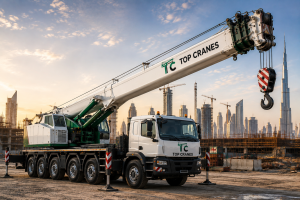
A mobile crane may suit machinery installation, structural components and loads requiring a planned suspended movement. Provide the proposed crane position, pickup and placement points, lifting height and radius so the equipment can be assessed against its load chart.
Confirm the space required for supports and counterweights, ground conditions, access and nearby obstructions. Rough-terrain mobility does not establish that a site’s ground can support a lift. Read the mobile crane selection guide before requesting a machine size.
When to consider a forklift
A forklift may suit repetitive pallet movement, truck loading and material distribution where the load can be supported correctly on the forks. Check the actual load centre, height, dimensions, fork arrangement and any attachment effect on capacity.
For indoor work, consider ventilation, emissions, charging or fuelling arrangements and manoeuvring space. For outdoor work, assess slopes, surface condition and the machine’s approved use. A rough-terrain label does not remove operating limits.
Where a telehandler may fit
A telehandler can offer telescopic reach for suitable material placement. Its capacity changes with extension, height and configuration. Check the machine-specific chart and approved attachment rather than treating it as a forklift with unchanged capacity at full reach.
Do not suspend loads from improvised attachments. Any proposed suspended-load task needs equipment specifically approved for that use and the required planning and controls.
Plan a combined operation
For example, a crane may unload a machine into an agreed landing area while a forklift handles separate palletised accessories. The work sequence should keep people and moving equipment separated and define who controls each stage.
Confirm delivery timing, storage space, equipment interfaces and whether transport is included. An unplanned change in the receiving area can affect both the lifting and handling arrangements.
Compare complete rental scopes
Ask for the proposed model and configuration, operator arrangements, delivery and collection, included hours, fuel or charging requirements, maintenance reporting, standby and extension terms. Verify the documents and personnel required by the project.
Use the crane hire questions and pre-lift checklist for lifting work. For wider project scheduling, see the heavy equipment rental planning guide.
Prepare your equipment request
Describe the result you need and supply verified load information, photographs, access dimensions, surfaces, indoor or outdoor conditions, preferred dates and duration. Equipment availability and the final scope should be confirmed in the quotation.
Discuss your project with Top Cranes
Send Top Cranes your site location, proposed dates, verified load weight, dimensions, lifting height and placement details. Include photographs and known access restrictions so the team can discuss equipment options, availability and the quotation scope.
Call +971 56 247 5452 or email your project requirements. You can also request a project quotation.